5 Essential Jazz Guitar Books You Have To Read
Jun 09, 2026How's it going, guys? Marc here from JazzGuitarLessons.net.
Let’s be completely honest for a second: the jazz guitar world is absolutely flooded with instruction books. If you go online, you’ll find thousands of pages of dense music theory, chord encyclopedias with shapes that seem to require a nine-foot finger span, and endless lists of scales that can make your head spin.
I’ve spent half my life digging through these stacks, and I've noticed a pattern. Most guitarists collect books like trophies but end up feeling more paralyzed than when they started. They get stuck in "analysis paralysis" instead of making actual, beautiful music on the instrument.
If you want to cut through the noise and build a real, functional jazz vocabulary, you only need a handful of truly transformative resources. Here are the 5 best jazz guitar books and learning materials that completely changed my perspective, and will actually help you play better jazz.
1. Connecting Chords with Linear Harmony
By Bert Ligon
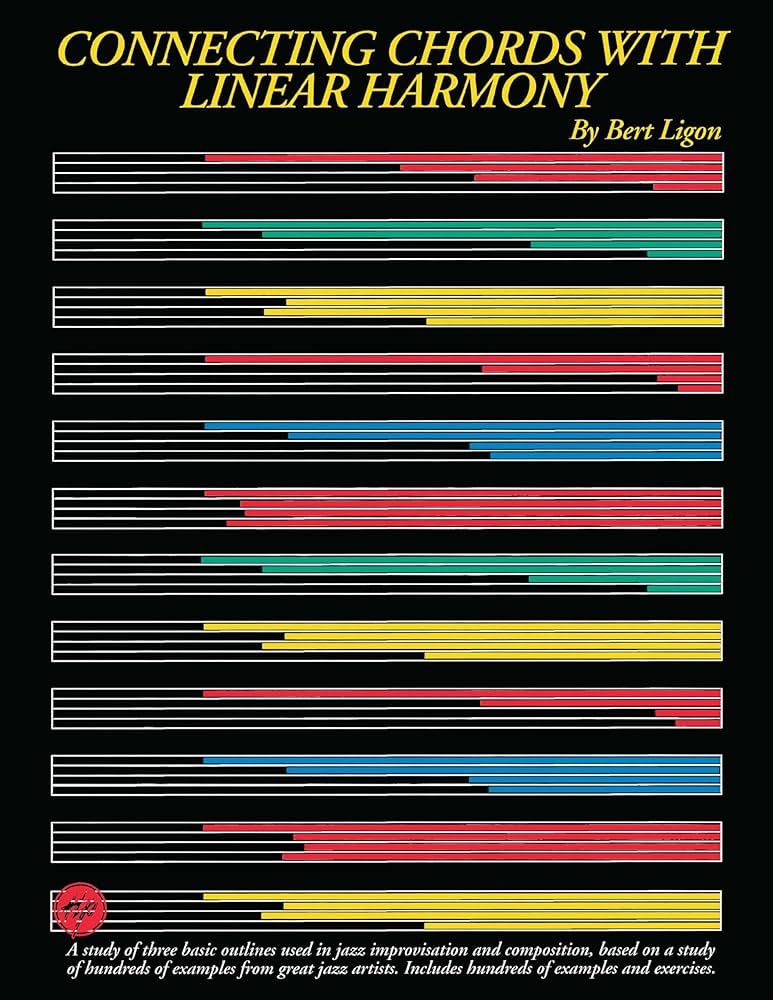
This is, bar none, my absolute favorite jazz improvisation book of all time.
The Big Takeaway: Jazz lines aren't random sequences of scales; they are built around predictable, elegant outlines that connect chord tones.
Many students look at a II-V-I progression and think, "Okay, Dorian scale, then Mixolydian, then Major." By the time they calculate all that, the chord change has passed them by!
Ligon simplifies this completely by showing you that great jazz players (from Louis Armstrong to Charlie Parker) used three basic melodic outlines to connect changing harmonies. I tell 90% of my students to skip straight to the exercises at the back of this book. You get to map your fretboard, master music theory, and internalize authentic jazz licks all at the exact same time.
2. Three-Note Voicings and Beyond
By Randy Vincent
If your comping (jazz chord playing) feels clunky, heavy, or just downright exhausting, this book will be an absolute lifesaver.
Many beginner and intermediate players think they need massive, six-string barre chords to sound full. The truth? Professional jazz guitarists love small, lean chords. Randy Vincent breaks down how to use simple three-note voicings, often built from the root, 3rd, and 7th (commonly called shell voicings) to play jazz beautifully.
It keeps your fingers nimble, leaves space for the bass player, and makes voice leading, connecting one chord smoothly to the next, completely effortless.
3. Forward Motion
By Hal Galper
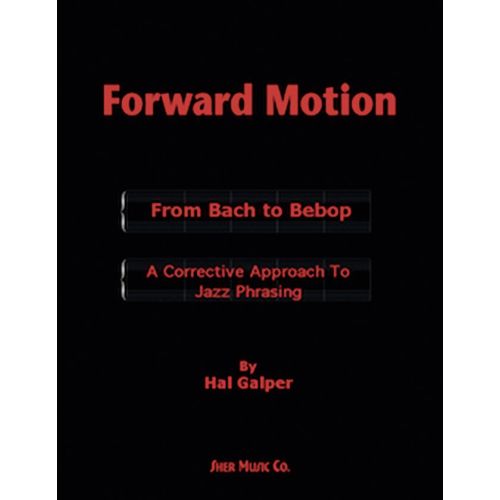
Now, this isn't strictly a guitar book—it was written by a phenomenal jazz pianist and educator—but it completely flipped my musical world upside down when I first read it.
The biggest problem I hear in developing jazz guitarists isn’t their note choice; it’s their rhythm. Too many players target the "downbeat" (Beat 1) as their destination, which makes their lines sound stiff, heavy, and mechanical.
Galper teaches you how to hear and play with forward motion—the art of using upbeat energy to drive into the next measure. It trains you to play through the bar line, giving your lines that elusive, authentic jazz swing that feels alive.
4. The Advancing Guitarist
By Mick Goodrick
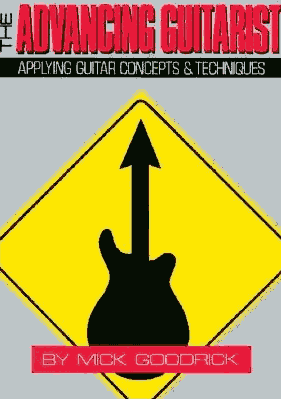
This is probably the most unique guitar book ever written.
And it's definitely not a typical method book.
Instead of spoon-feeding exercises, Mick Goodrick forces you to think.
He presents ideas, concepts, and challenges that encourage exploration of the instrument.
Some students open it and think:
"What am I supposed to do with this?"
Exactly.
The book encourages creative problem-solving rather than simply copying patterns.
Many professional guitarists still revisit it decades after first reading it.
Best for:
Intermediate to advanced players
Players stuck in patterns
Guitarists looking for fresh ways to see the fretboard
5. The Real Book (6th Edition)
By Hal Leonard / Chuck Sher
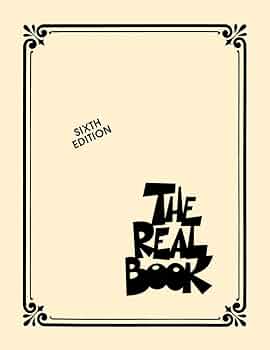
I always tell my students: the road to jazz mastery is paved with playing actual tunes. You can practice scales until your fingers bleed, but if you don't apply them to a melody and a set of changes, you aren't playing jazz.
The Real Book is the ultimate industry standard fake book. Whether you are sitting at home practicing or heading out to a local jam session, you and your peers need to be speaking the same language.
| Why You Need It | What It Teaches You |
|---|---|
| Common Repertoire | Instantly grants you access to hundreds of standards (Autumn Leaves, Blue Bossa, etc.) called at jams. |
| Contextual Learning | Forces you to study harmony and improvisation inside a real musical framework. |
| Fretboard Navigation | Translating single-note melodies and chord symbols onto the neck builds ultimate spatial awareness. |
My Advice? Pick ONE and Dive In.
Don't buy all five of these today. Seriously, don't do it!
Pick the one that addresses your biggest current bottleneck. If your solos sound like disconnected scales, grab the Bert Ligon book. If your chords feel stiff and bulky, check out Randy Vincent.
Pick one, take it to the woodshed, and focus on moving your fingers rather than just filling your head.
Happy practicing,
Marc
JazzGuitarLessons.net
MASTER JAZZ GUITAR WITH A SIMPLE, PROVEN SYSTEM
Stop the overwhelm. Skip the endless scales. Get the clear, structured system that helps you actually play jazz guitar – in minutes a day, not years.
Written by